
Author
Marcus PetrovicDirector & Head of Client Strategy
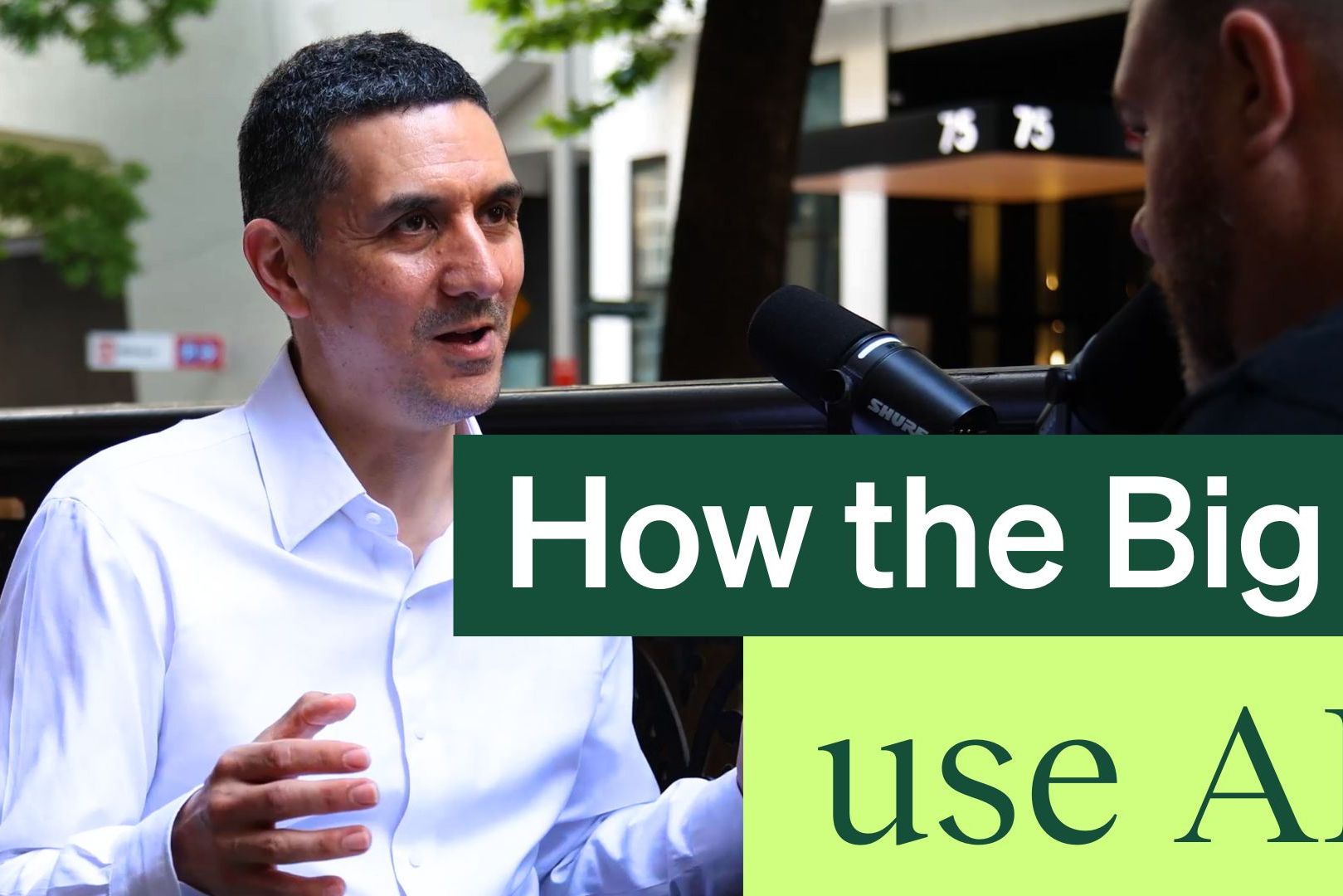
In this episode of the MG Academy Podcast, Marcus Petrovic sits down with Edmund Tadros, journalist at the Australian Financial Review, to unpack how AI is actually being adopted across consulting and accounting firms, what the Deloitte report incident revealed about the dangers of unchecked AI output, and why professional judgment remains irreplaceable.
Edmund covers the AFR's Top 100 accounting firms and has a front row seat to how the profession is responding to AI. His research found that more than half of the top firms are actively using or experimenting with AI, but adoption is concentrated in high repetition, transaction level work. Think GST reconciliation, client onboarding forms and disbursement processing. The more complex, judgment heavy work remains firmly in human hands.
One of the most telling examples from the conversation is how Big Four audit teams are building specialised AI agents. Rather than one tool doing everything, firms are developing individual agents that each handle a single task within an audit process. One agent retrieves bank documentation, another pulls client side balances, a third flags discrepancies. The auditor then reviews everything against the original source material before signing off. It speeds up the fieldwork, but the layers of human oversight remain critical.
The Deloitte incident offers a clear warning. A consulting report prepared for a federal government department contained fabricated references and a summary of a legal case that was generated by AI. As Edmund put it, the lesson is not to stop using AI. It is to know exactly where AI has been used and to apply extra scrutiny to those sections. The same standard applies to any professional services firm producing work for clients. If your name is on the report, the responsibility sits with you.
Marcus also raised how this connects to the work Mackay Goodwin does with small business restructuring and tax debt. With roughly $100 billion in tax debt owed by Australian businesses and the ATO increasingly using data matching technology, there is a real opportunity for AI to help identify problems earlier. If accountants and advisers can move from reactive, point in time reporting to something closer to real time visibility, businesses are less likely to let tax debt spiral to the point where it becomes unmanageable.
The key takeaway from the episode is simple. AI is a tool, not a replacement for expertise. It can make processes faster, help generate ideas and handle routine tasks. But it cannot replace the professional judgment that accountants, auditors and advisers bring to complex, exception driven work. The advice from both Marcus and Edmund: embrace it, experiment with it, but question everything it produces.
Get in touch
Speak to one of our experts now for a free consultation. Enter your details below or call 02 8001 6520.