
Author
Marcus PetrovicDirector & Head of Client Strategy
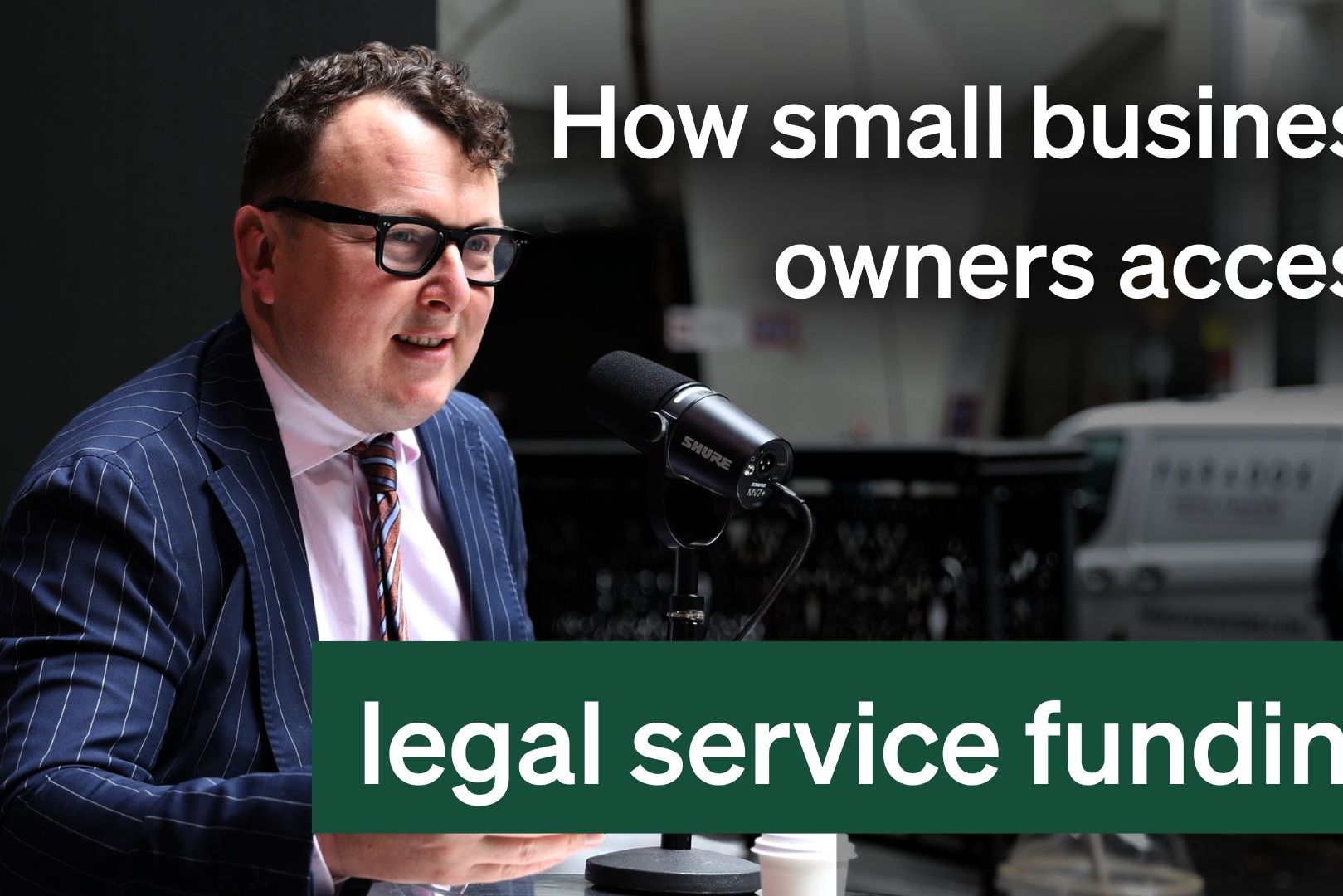
In this episode of the MG Academy Podcast, Marcus Petrovic sits down with Aaron McDonald, Managing Director of Pragma Lawyers and Director of litigation funder Heartwell Funds, to unpack how litigation funding actually works, what funders look for when assessing a case, and why access to justice matters for small business owners who would otherwise never pursue a claim.
What is litigation funding and why does it matter?
Aaron runs a 57 person law firm in Perth with a strong focus on insolvency and restructuring, and separately serves as a director of Heartwell Funds, a litigation funder operating nationally. Importantly, the two roles cannot overlap. If Heartwell funds a matter, Pragma cannot act as the lawyers on it. That ethical separation is something Aaron is upfront about, and it is a point worth understanding for accountants and advisers who might otherwise assume there is a conflict of interest in the referral.
Litigation funding exists to solve a fundamental problem: legitimate claims go unpursued because the claimant cannot afford the legal costs. Former High Court Chief Justice Robert French identified this in a review for the Productivity Commission, recommending that litigation funding be made more accessible as a key plank of improving access to justice in Australia. For the subcontractor owed money by a major principal contractor, funding can turn an impossible situation into a viable one.
What funders look for when assessing a case
For insolvency practitioners and their advisers, litigation funding can solve a problem that comes up regularly. A company enters liquidation or voluntary administration, and there are legitimate claims to pursue, but no money to fund the legal costs. Aaron explains that the due diligence process is free. Heartwell will review the case at no cost and assess whether it meets their criteria: a defendant with deep pockets or an insurance policy, strong legal merits, and a realistic path to resolution.
He notes that 97% of cases resolve by consensus rather than going to trial, so funders are typically looking for matters that should settle rather than ones that will drag through years of litigation. As a general rule of thumb, the funding element needs to be roughly a tenth of the claim amount. So a million dollar claim would typically require around $100,000 in funding to run.
The strategic advantage of having a funder involved
The psychological effect of having a litigation funder involved should not be underestimated. Once the other side knows that funding is in place, the dynamic shifts. The defendant can no longer rely on wearing down a claimant who is running out of cash. In most jurisdictions, including Western Australia, parties are required to disclose litigation funding arrangements to the court and the other side, which sends a clear signal that the matter is going all the way if it needs to.
The funder also acts as a strategic partner, sitting on every email and involved in every key decision. This is particularly valuable when the claimant is unsophisticated and would not otherwise know how to instruct lawyers effectively. Litigation funding also provides security for costs, which is critical for insolvency practitioners who are personally liable. If a funded claim is unsuccessful, the funder covers the adverse costs exposure rather than the practitioner wearing it personally.
Insolvency pressures in Western Australia
Aaron and Marcus also discuss the practical realities of insolvency work in Western Australia, where the economy revolves heavily around mining and mining services. Transport companies in particular are feeling the pressure, with rising insurance costs, diesel prices and ATO debt combining to push operators to the edge. One operator Aaron described saw their fleet insurance jump from $50,000 to $150,000 in a single year.
The conversation also touches on winding up applications and the importance of acting early. Courts are far less sympathetic to adjournment requests when a company has sat on correspondence for months without taking any steps to address the debt. Aaron's advice is to put evidence before the court showing what steps the company is taking rather than simply asking for more time.
Key takeaways for accountants and advisers
The key message for accountants, lawyers and advisers is straightforward. If a client has a legitimate claim but no funds to pursue it, it costs nothing to have a litigation funder take a look. Aaron and his team are happy to take calls, workshop scenarios and provide an initial view at no charge. And if a client is facing a winding up application, the earlier they engage with the process, the better their chances of a workable outcome.
Get in touch
Speak to one of our experts now for a free consultation. Enter your details below or call 02 8001 6520.